If you are potentially impacted by a government shutdown, click here for more information on registration.

If you are potentially impacted by a government shutdown, click here for more information on registration.
Woolpert
From smarter infrastructure planning to disaster resilience, Geo Week is where government and public service professionals discover the tools, technology, and expertise to serve their communities better.
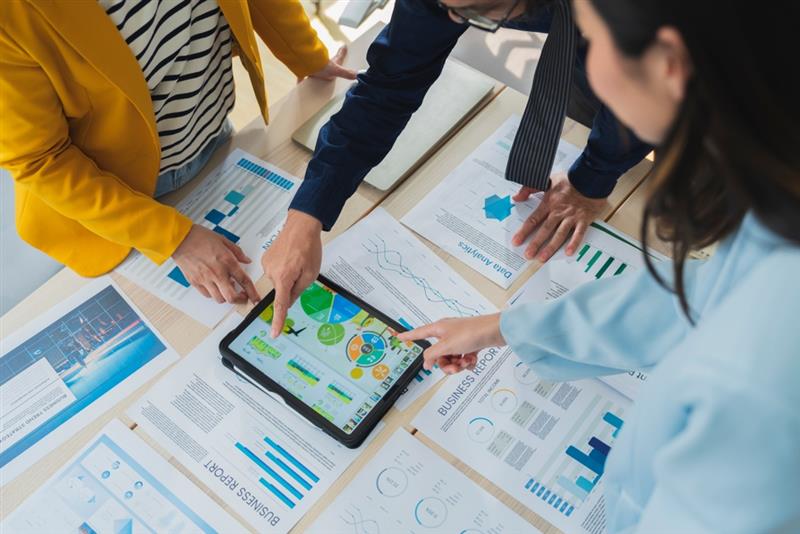
Across all levels of government, agencies are being called to do more with less — making smart, data-driven decisions is no longer optional. At Geo Week, you’ll connect with leading experts, cutting-edge technology providers, and forward-thinking peers who are redefining how public services are delivered.
Below is a collection of sessions for government and public service professionals – be sure to view the complete conference program schedule to see all the sessions available to you!
State and federal transportation agencies are embracing geospatial technology to modernize infrastructure management, improve safety, and optimize long-term planning. This session highlights how lidar, UAS, AI, and standardized geospatial workflows are transforming the way agencies collect, manage, and apply transportation data at scale.
Presentations will showcase advancements in automated asset inventories, statewide drone program development, and national efforts to standardize surveying and mapping practices. Attendees will learn how transportation departments are integrating mobile lidar, cloud-based collaboration tools, and data governance frameworks to enhance efficiency and accuracy from the field to the office.
Together, these case studies demonstrate how next-generation geospatial technologies and data standards are driving a more connected, precise, and intelligent future for transportation infrastructure management.
Transportation planning and mobility rely on accurate, detailed data about pedestrian infrastructure, yet traditional collection methods are often labor-intensive and inconsistent. This session explores innovative approaches that combine lidar and AI to modernize how pedestrian pathways and accessibility features are measured, mapped, and analyzed. Topics include using lidar for precise curb ramp assessments to support ADA compliance, advanced AI-driven workflows for large-scale pathway network creation, and deep learning applications that transform high-resolution imagery into actionable feature layers. Attendees will learn how these technologies improve measurement accuracy, reduce human error, enable scalable data collection, and support urban planning and mobility initiatives with rich, connected datasets.
Locating and understanding the hidden infrastructure beneath our cities has long been one of the most complex challenges in construction and design. Today, advances in Ground Penetrating Radar (GPR), radar tomography, electromagnetic locating, and GPS-integrated mapping are turning Subsurface Utility Mapping (SUM) into a smarter, safer, and more precise discipline.
In this session, experts will explore how remote sensing technologies are transforming underground utility detection—from uncovering undocumented assets to integrating high-resolution 3D models into digital twins and city-scale datasets. Through real-world examples, attendees will gain insight into the tools, workflows, and best practices that prevent costly strikes, improve compliance, and create a single source of truth for future infrastructure projects.
Whether you’re an engineer, contractor, or municipal planner, you’ll walk away with practical strategies for scanning before digging, interpreting results, and making data-driven decisions that protect both your people and your projects.
From floodplain management to transportation corridor monitoring, today’s most pressing infrastructure and environmental challenges demand smarter, faster, and more integrated geospatial solutions. This session brings together experts leveraging the latest in mobile GIS, topobathymetric LiDAR, and Geo AI to transform how we model, manage, and protect critical systems. Presentations will explore how mobile GIS and hydraulic modeling can work together to enable real-time, cloud-based water resource management, improving accuracy and efficiency in field-to-model workflows. Attendees will also learn how compact UAS-based topobathymetric LiDAR systems are revolutionizing floodplain mapping and mitigation design—delivering dense, high-resolution data that inform safer, more resilient communities. Finally, the session will highlight how Geo AI and remote sensing are being combined to monitor transportation corridors at scale, providing actionable insights into environmental risk, slope stability, and land-use change. Together, these case studies showcase how innovations in geospatial data collection, processing, and analytics are reshaping water and infrastructure management—offering scalable, cost-effective pathways to resilience in the face of climate and operational challenges.
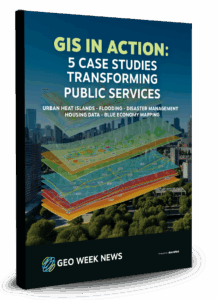
Government professionals interested in purchasing a Full Conference Pass qualify for the government rate which is $200 off the listed Full Conference Pass price. This cannot be combined with any other offer. Government professionals are responsible for any additional costs including add-on workshops. Meals can be purchased onsite. Use code GOV200 when registering. If you are unsure if you can attend but want to reserve your spot, use this code to select a free Exhibit Hall Pass and call to upgrade to a Full Conference Pass once you get approval.
Government professionals interested in exploring the exhibit hall qualify for the government rate which is a free Exhibit Hall Pass. Government professionals are responsible for any additional costs including add-on workshops. Meals can be purchased onsite. Use code GOV200 when registering.
If you are unsure if you can attend but want to reserve your spot, use this code to select a free Exhibit Hall Pass. You can also upgrade to a Full Conference Pass once you get approval.
Government employees qualify for tax-exempt registration. During registration, you will have the opportunity to upload proof of tax exemption, or you may choose to skip this step during registration and pay by invoice later. If paying by invoice, please email proof of tax-exempt status to [email protected] and include “Geo Week Tax Exemption” in the subject line. If you’ve already registered and paid taxes, any applicable taxes will be refunded upon receipt of documentation, which must be received prior to attending.
For those using the pay-by-invoice option, simply select the blue Pay by Invoice button located beneath the credit card payment section on the payment page.
Government hotel rates are also available but limited. Visit the Travel page for more info.
Make your case to attend and get all the details to make your trip seamless.


Diversified Communications. All rights reserved.
