This session will showcase how reality capture, geospatial intelligence, and XR technologies are advancing the way we document, analyze, and manage complex infrastructure—both new and existing.
Session 1 – 1:00 PM – 1:30 PM
The Rail Beneath the City: What 54 Miles Taught Us About Data, Tunnel Surveying, and Cracks
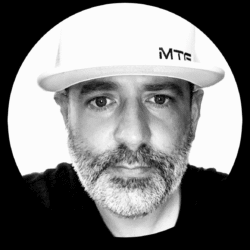
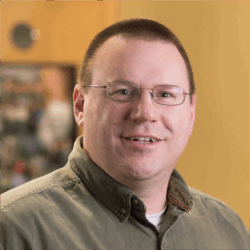
Presented by Jon Miranda and Nathan Goins, HNTB Corporation
Urban rail projects present some of the toughest challenges in surveying and data collection. This session takes you behind the scenes of a 54-mile mapping project—featuring a 4-mile tunnel—to reveal lessons learned in control planning, mobile lidar, and crack detection workflows. Attendees will gain insight into overcoming GNSS issues, maintaining precision at speed, and safely capturing high-resolution data in active metro environments.
Session 2 – 1:30 PM – 2:00 PM
Repurposing Scan Data and Point Clouds for Monitoring: A Case Study
Presented by Paul Tokarczyk, LHB Corp., and Michael Powers, Barr Engineering Co.
Can old data solve new problems? This session explores how historical scan data—collected six years prior using different equipment and controls—was successfully repurposed to assess structural movement. Learn how to evaluate risk, manage data limitations, and communicate uncertainty, while anticipating future client requests for data reuse and maximizing long-term value from captured datasets.
Session 3 – 2:00 PM – 2:30 PM
Advancing Geospatial Workflows with XR-Integrated Reality Capture for Documentation, Inspection, and Collaboration
Presented by Scott Aldridge and Mark Franklin, CDM Smith
Extended reality and reality capture are converging to transform documentation and inspection workflows. This session demonstrates how lidar, photogrammetry, 360° imagery, and drones—integrated into XR environments—enhance collaboration and data accessibility across distributed teams. From bridges and dams to hurricane recovery sites, attendees will see scalable workflows that improve accuracy, visualization, and coordination across complex infrastructure projects.
Together, these sessions illustrate how data reuse, immersive technology, and advanced capture methods are reshaping infrastructure intelligence—underground, above ground, and beyond.